-
🌊 Call for Speakers, Sea Tech Week 2026
Are you a researcher, developing marine technologies, or carrying a vision for the future of the ocean?Do you want to leave an impact on the marine science and technology community?
Then here is your chance to make your voice heard!
🎤 Submit now your application to be a speaker at Sea Tech Week,…Read More
-
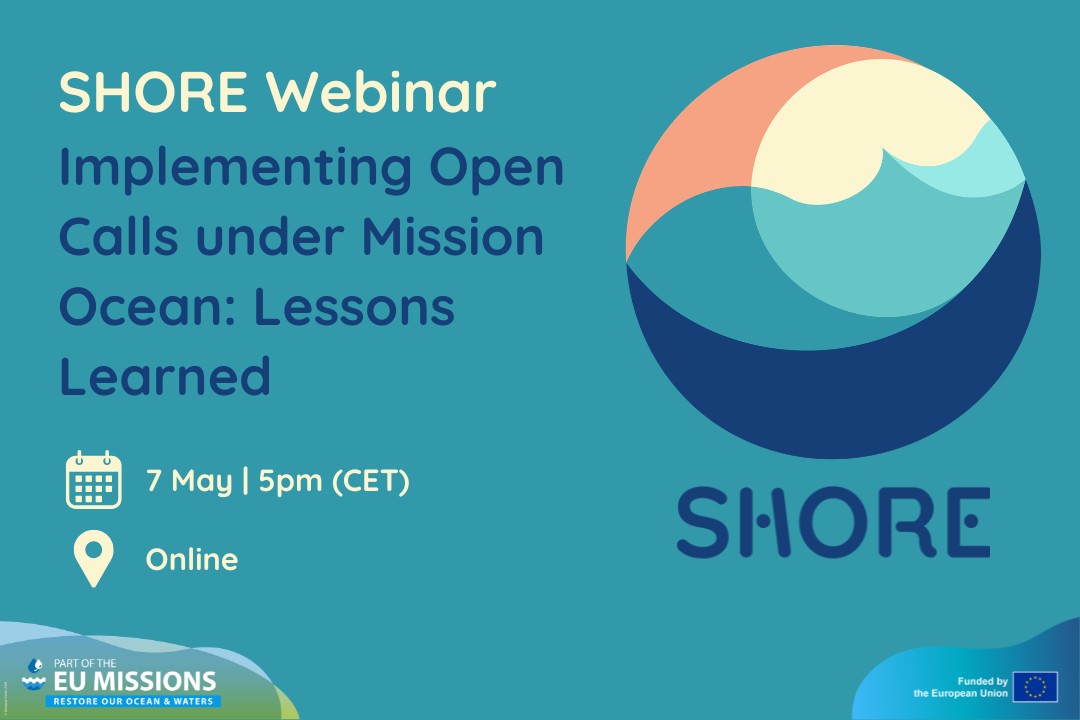
One of our sister projects, SHORE is organizing an exciting webinar on How to implement calls under Mission Ocean and Waters.
📆 7 May, 17:00 CET
📌 Register: https://inevent.uk/en/Crowdhelix/ImplementingOpenCallsunderMissionOcean/hotsite.phpThis practical session will discuss how to implement Mission Ocean open calls, highlighting cascade…Read More
Implementing Open Calls under Mission Ocean: Lessons Learned - WebsiteThis session will share practical experience from implementing open calls under Mission Ocean, with a focus on cascade funding (Financial Support to Third Parties) as a mechanism to reach schools and other local actors efficiently and at scale.Drawing on lessons learned from the SHORE, ProBleu, and BlueLightS consortia, the event will look beyond theory to discuss what it takes to design and deliver open calls that are clear, fair, and impactful—for both applicants and funders.Participants will gain a structured overview of how cascade funding works in the Mission Ocean context, followed by candid reflections from consortia teams on what went well and what could be improved across the full lifecycle of an open call: setting priorities, communicating requirements, supporting applicants, evaluating proposals, contracting, monitoring implementation, and capturing results. Join us to: Understand how cascade funding mechanisms are used under Mission Ocean to support smaller actors and speed up local impact. Learn from practice through implementation insights from SHORE, ProBleu, and BlueLightS—what worked well, what created friction, and how processes can be strengthened. Identify transferable lessons for designing future open calls: clearer guidance, better support, efficient evaluation, and meaningful impact reporting. Bring your questions to an interactive Q&A on practical implementation challenges and solutions. If you have any questions regarding this event, contact us at events@crowdhelix.com.inevent.uk -
If you are a teacher/educator and wants to bring the topic of seagrass to your classroom, the SEQUEST project is for you! 🌱
They have just published their Curriculum for Teachers that includes fundamental terms, concepts regarding seagrass species and their conservation while it also aims to organize them into teaching modules and align them…Read More
-
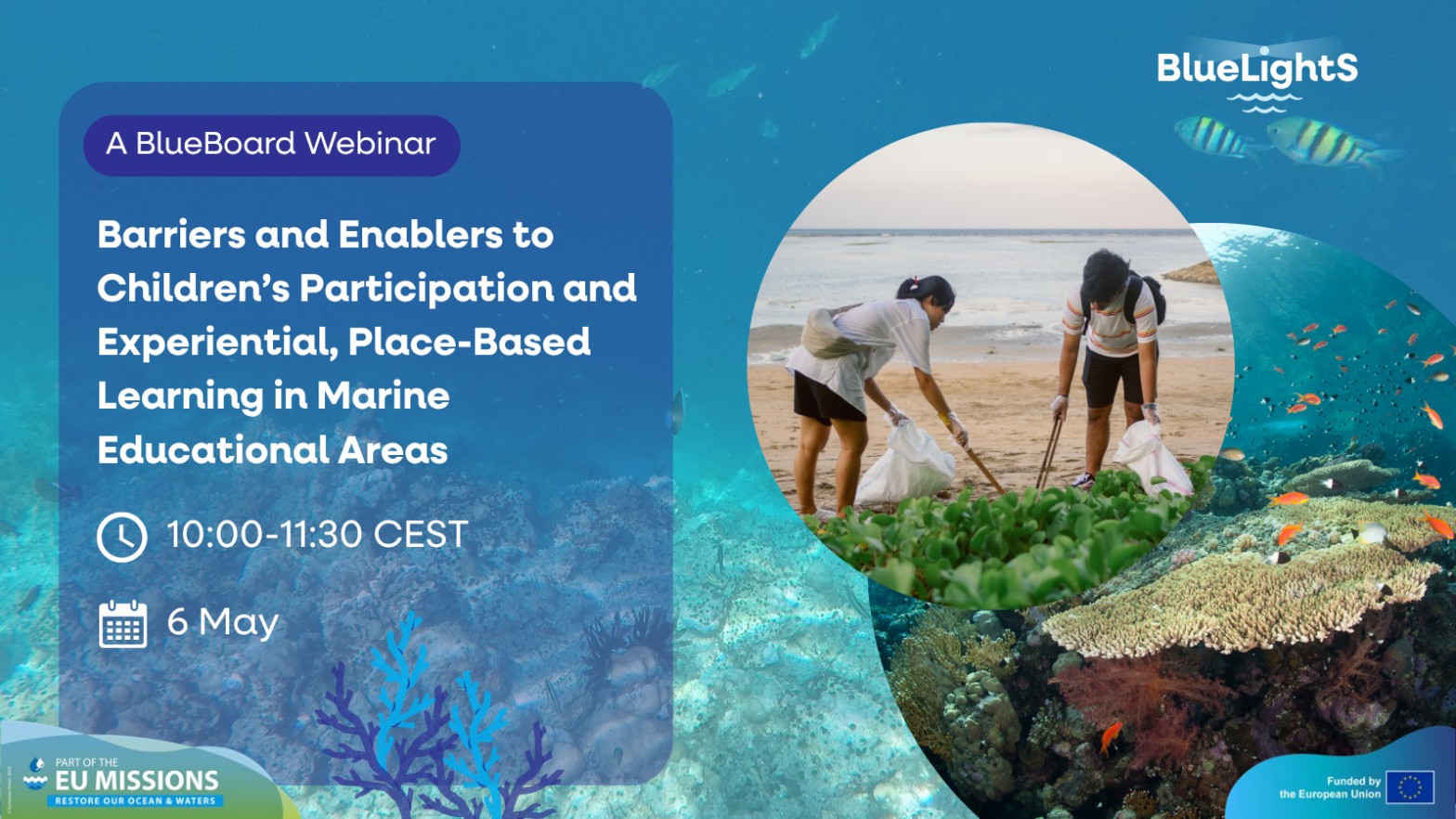
New webinar is coming up!
What to Expect?
How children experience and interact with marine environments through EMAs?
The role of situated and experiential learning in environmental education
Key challenges and success factors in fostering student participation
The impact of participatory research across diverse educational and geographic…Read More -
Pe valea râului Strei, în Geoparcul Internațional UNESCO Țara Hațegului, proiectul „Zâna Viață și Monstrul de Plastic” ajunge la final. Prin activitățile desfășurate, elevi, profesori și comunități locale au contribuit la crearea unui spațiu educativ nou și la formarea unei comunități de copii implicați activ în protejarea biodiversități…Read More
- Load More Posts
About Me
Eleni Koumpaki
Research Technician
Driven by a deep fascination with marine life, I hold an MSc in Environmental Biology from the University of Crete. My thesis research at the Hellenic Centre for Marine Research (HCMR) took me into the hidden world of polychaetes, exploring their spatial and temporal dynamics in Heraklion Bay as part of the MAR.B.E.F.E.S. project on biodiversity conservation — because even marine worms have a story worth telling.
Currently, as a Research Technician in the Ecology and Ecosystem Management Laboratory at HCMR, I study coastal ecosystems through a mix of fieldwork, taxonomy, and ecological assessments. No two days look the same, and that's exactly how I like it.
Beyond the lab and the boat, I believe that good science should reach beyond academic journals. I engage with stakeholders, champion ocean literacy, and advocate for the sustainable management of marine resources — working to bridge the gap between research and society, and to inspire future generations to care for and protect our oceans.
Friends
Groups