-
🌊 Two new educational resources are now available in our Knowledge Hub section!
📚 New Resources
🔹 Gardiens de la Méditerranée – WWF educational materials and activities helping young people understand and protect the Mediterranean Sea.
🔹 Plages Vivantes – A participatory biodiversity monitoring programme where students and teachers can c…Read More
-
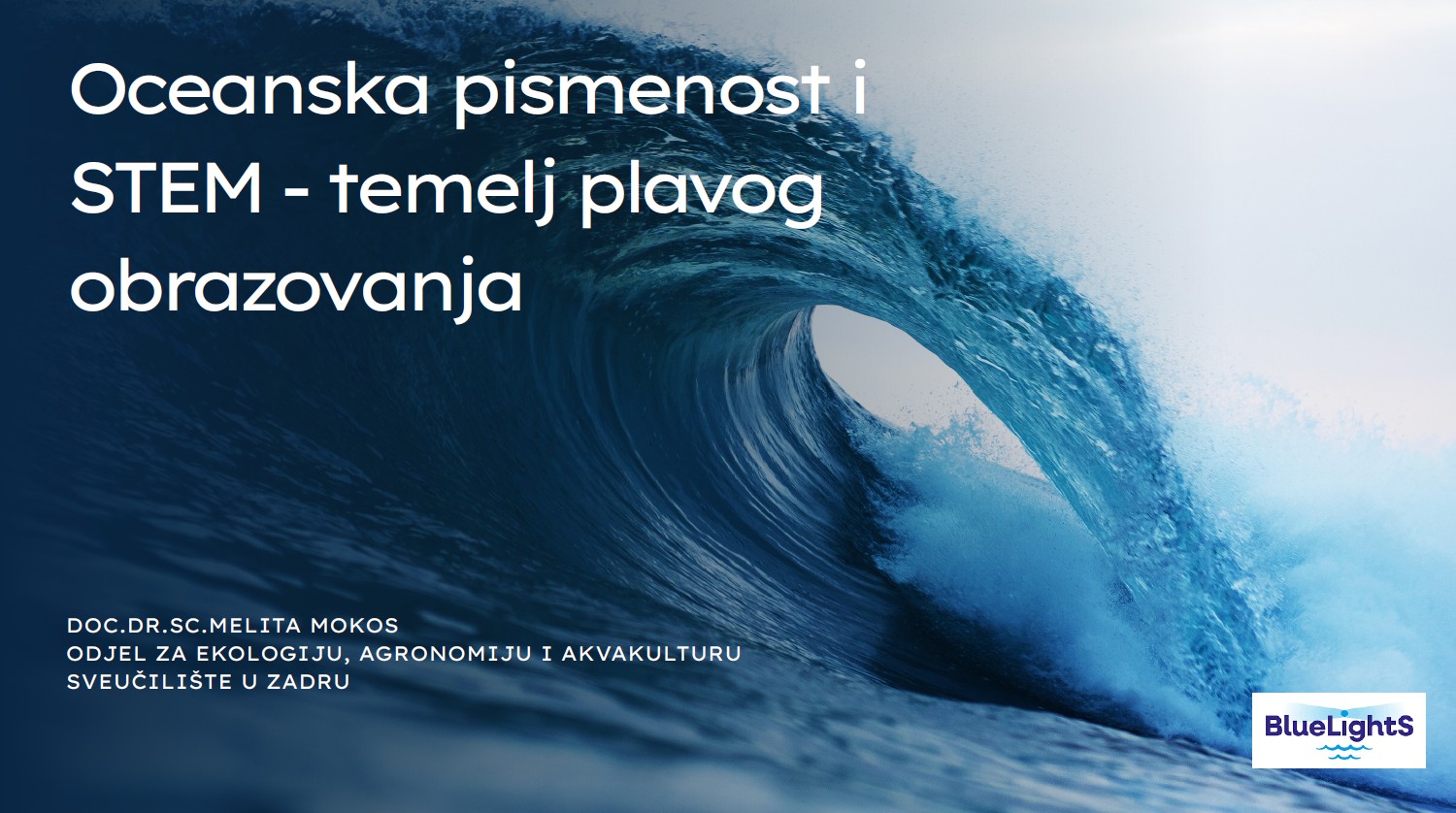
We are continuing to share best practices of blue education in Croatia. During the conference dedicated to STEM education, we raised a discussion about blue education. It was a great opportunity to share Croatian experimentation experience and introduce blue education and ocean literacy to the teachers.
![]()
-
![Profile picture of Luca Jendrek]()
Luca Jendrek posted in the group Profesores de España
Buenos días,
La organización One Ocean Planet ha preparado unas flashcards educativas dirigidas a alumnado y profesorado para aprender más sobre el océano, las ballenas y las diferentes profesiones vinculadas al entorno marino.
Estas flashcards profundizan en los siguientes temas:
La importancia del océano para la vida en la Tier…Read More
-
23 May, is the World Turtle Day!🐢
On this occassion the “Take 3 for the Sea” Australian NGO provides free access to teaching materials for all ages, for free.
After a simple registration, you will be able to download these awesome materials in…Read More
-
Can we one day talk to a virtual grouper, pen shell, or dolphin as a way of learning about the sea?
It may sound like science fiction, but researchers are already developing educational platforms where students can talk to virtual marine organisms using artificial intelligence.
In the recently published study “OceanChat”, participants int…Read MoreOceanChat: The Effect of Virtual Conversational AI Agents on Sustainable Attitude and Behavior ChangeOceanChat: The Effect of Virtual Conversational AI Agents on Sustainable Attitude and Behavior Changehttps://arxiv.org/abs/2502.02863![]() OceanChat: The Effect of Virtual Conversational AI Agents on Sustainable Attitude and Behavior ChangeMarine ecosystems face unprecedented threats from climate change and plastic pollution, yet traditional environmental education often struggles to translate awareness into sustained behavioral change. This paper presents OceanChat, an interactive system leveraging large language models to create conversational AI agents represented as animated marine creatures -- specifically a beluga whale, a jellyfish, and a seahorse -- designed to promote environmental behavior (PEB) and foster awareness through personalized dialogue. Through a between-subjects experiment (N=900), we compared three conditions: (1) Static Scientific Information, providing conventional environmental education through text and images; (2) Static Character Narrative, featuring first-person storytelling from 3D-rendered marine creatures; and (3) Conversational Character Narrative, enabling real-time dialogue with AI-powered marine characters. Our analysis revealed that the Conversational Character Narrative condition significantly increased behavioral intentions and sustainable choice preferences compared to static approaches. The beluga whale character demonstrated consistently stronger emotional engagement across multiple measures, including perceived anthropomorphism and empathy. However, impacts on deeper measures like climate policy support and psychological distance were limited, highlighting the complexity of shifting entrenched beliefs. Our work extends research on sustainability interfaces facilitating PEB and offers design principles for creating emotionally resonant, context-aware AI characters. By balancing anthropomorphism with species authenticity, OceanChat demonstrates how interactive narratives can bridge the gap between environmental knowledge and real-world behavior change.arxiv.org
OceanChat: The Effect of Virtual Conversational AI Agents on Sustainable Attitude and Behavior ChangeMarine ecosystems face unprecedented threats from climate change and plastic pollution, yet traditional environmental education often struggles to translate awareness into sustained behavioral change. This paper presents OceanChat, an interactive system leveraging large language models to create conversational AI agents represented as animated marine creatures -- specifically a beluga whale, a jellyfish, and a seahorse -- designed to promote environmental behavior (PEB) and foster awareness through personalized dialogue. Through a between-subjects experiment (N=900), we compared three conditions: (1) Static Scientific Information, providing conventional environmental education through text and images; (2) Static Character Narrative, featuring first-person storytelling from 3D-rendered marine creatures; and (3) Conversational Character Narrative, enabling real-time dialogue with AI-powered marine characters. Our analysis revealed that the Conversational Character Narrative condition significantly increased behavioral intentions and sustainable choice preferences compared to static approaches. The beluga whale character demonstrated consistently stronger emotional engagement across multiple measures, including perceived anthropomorphism and empathy. However, impacts on deeper measures like climate policy support and psychological distance were limited, highlighting the complexity of shifting entrenched beliefs. Our work extends research on sustainability interfaces facilitating PEB and offers design principles for creating emotionally resonant, context-aware AI characters. By balancing anthropomorphism with species authenticity, OceanChat demonstrates how interactive narratives can bridge the gap between environmental knowledge and real-world behavior change.arxiv.org - Load More Posts